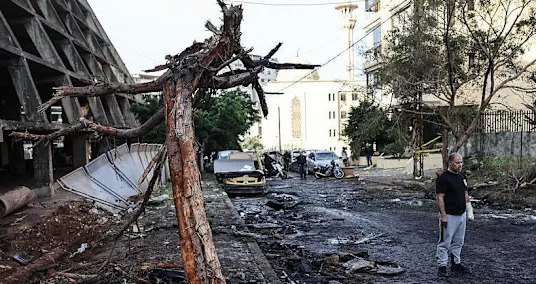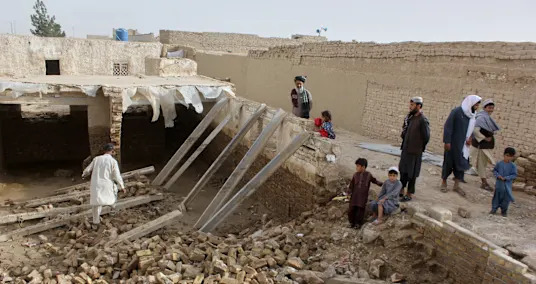
Heavy rain that has caused severe flooding and landslides has killed at least 45 people in Afghanistan and Pakistan over the past five days, authorities say.
Afghanistan’s National Disaster Management Authority (ANDMA) said on Monday that 28 people have been killed in the floods and 49 injured with more than 100 homes destroyed.
Most of the deaths in Afghanistan were reported in central and eastern provinces, including Parwan, Maidan Wardak, Daikundi and Logar, according to ANDMA.
The authority added in a statement that weather conditions remained “unstable” in parts of the country and there is a continued risk of more rain and flooding in some areas.
“In total, 1,140 families have been affected,” ANDMA said.
Police spokesperson Sediqullah Seddiqi told the AFP news agency a 14-year-old boy died after being struck by lightning in the northwestern province of Badghis.
He added that in the same province, three people had drowned while trying to gather driftwood to be used for heating.
At the same time in Pakistan’s Khyber Pakhtunkhwa province, which shares a border with Afghanistan, 17 people were killed and 56 wounded, the Provincial Disaster Management Authority said.

Extreme weather
Heavy rainfall has continued to sweep across Afghanistan since Thursday, causing floods and landslides in multiple provinces.
The weather prompted the closure of several highways, according to officials in central and eastern Afghanistan. Further rains and storms are forecast for Tuesday.
Afghanistan’s National Disaster Management Authority has warned citizens to refrain from using “rivers and flooded streams, and follow the weather forecast seriously”.
In the central province of Daikundi, the local disaster management department said a five-year-old was killed when a roof collapsed. A woman was also killed in the same circumstances in the eastern province of Nangarhar, police spokesperson Sayed Tayeb Hamad said.
Afghanistan is vulnerable to extreme weather, particularly heavy rainfall and monsoon seasons, which trigger floods and landslides in remote areas with fragile infrastructure.
In January, flash floods and snowfall caused the deaths of at least 17 people and killed livestock.
LATEST POSTS
- 1
 Experience Is standing by: History's Most noteworthy Travelers
 - 2The Response to Self-improvement: Embracing a Development Outlook
- 3Kids with smartphones by age 12 are at higher risk of health issues, study finds
- 4The Secret Destinations Amex Says Will Be More Popular Than Bali by 2026
- 5A Republican elected governor in California? It's not as far-fetched as it sounds.


- 5 Great Youngster Care Administrations To Watch in 2024
- Beyond the habitable zone: Exoplanet atmospheres are the next clue to finding life on planets orbiting distant stars
- Step by step instructions to Shield Your Wellbeing Around 5G Pinnacles\
- The Best Computer games Ever
- Coffee Prices Finish Higher on Brazil Cop Concerns
- Artemis 2 astronauts — now halfway to the moon — report 'burning smell' from toilet, but everything's fine
- British-Egyptian dissident apologises for tweets as Tories push for UK deportation
- The Most recent Microsoft Surface Star PC: Ideal for Top of the line Planning and Gaming Needs
- Israel intensifies Lebanon attacks and hits areas not in Hezbollah's control