
Portugal ranks fourth in the European Union for the share of professionals regularly working 49 hours or more per week in their main job.
The figure, which covers 9.1% of employees according to a Randstad Research analysis and based on data from the final quarter of 2025, sits well above the EU average of 6.5% and comfortably exceeds the standard working weeks of 35 hours in the public sector and 40 hours in the private sector.
Only Greece (12.4%), Cyprus (10%) and France (9.7%) had an even higher proportion of employees spending at least 49 hours a week at work.
As Randstad's estimates point out, Portugal had "a higher incidence of long [working] hours than economies such as Germany or Spain," where the percentage of professionals subject to long hours was 5% and 6.3% respectively.
The scenario has somewhat changed in favour of workers over the last few years, the study reveals. Even so, Portugal remains far from the standard of other economies in the bloc.

"Although there has been a reduction since 2000, Portugal maintains a culture of long hours above the European average," the report states.
This is a reality that "disproportionately affects employers and the self-employed".
In the former case, around 35% were regularly working at least 49 hours a week in 2024, while in the latter only around 20%.
As far as employees are concerned, far fewer were exposed to such long working hours at that time, roughly 6.8%.
Portugal's labour force is now better qualified
Randstad's analysis also points to a favourable evolution in the qualifications of the working population aged between 15 and 64 in Portugal.
"The proportion of working people with higher education has tripled since 1992, rising from 11.4% to 33.7% at the close of 2024."
Even so, by the fourth quarter of 2025 the country still had only 36.2% of its citizens who had completed higher education. This is below the average of the 27 European Union member states which stands at 39.2%.
Taking into account all these estimates, Portugal is the eighth worst EU country in this regard.
Ireland (57.3%) had the highest proportion of working people with higher education, in stark contrast to Romania (22.7%).
Despite the "historical analysis" showing "an unprecedented qualification of the national workforce" over the years, Randstad reports that in the last quarter of 2025, Portugal still had "the highest percentage of low-skilled professionals in the EU (29.1%), double the European average (14.7%)".
Related
LATEST POSTS
- 1
 Satellite constellations could obscure most space telescope observations by late 2030s: 'That part of the image will be forever lost'
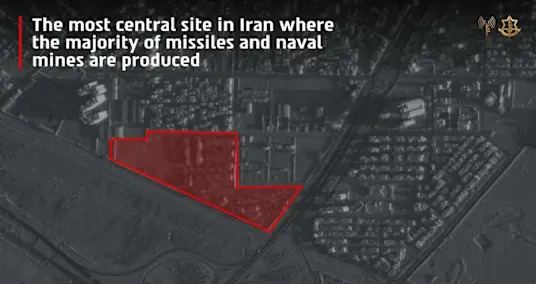
 - 2IDF destroys regime's missile, sea mine production site in Yazd amid nationwide airstrikes
- 35 things for parents to know about changes to kids vaccine schedule
- 425 Years Ago, Audi's Rosemeyer Concept Was A Steampunk Supercar With A Massive Engine
- 5An Extended time of Careful Nurturing: Individual Bits of knowledge on Bringing up Youngsters



- Everyone knows F1 is for the girls. I wandered into the Las Vegas desert to find out why.
- Artemis 2 breaks humanity's all-time distance record during historic loop around the moon (video)
- Aluminum salts emerge as likely target as health officials scrutinize childhood vaccines
- Canada's Serene Lakeside Mountain Village Is A Breathtaking Oasis For Outdoor Adventure
- Find the Advantages of Deep rooted Getting the hang of: Extending Information and Self-awareness
- Humpback whale freed by rescuers in Baltic Sea has become stranded again
- Day to day Temporary Positions That Compensate Fairly in the US
- Why the Houthis waited until now to strike
- Foreign military officials can become Israel's ambassadors, senior IDF commander tells 'Post'